
UK +44 131 560 6629 USA TOLL FREE 800-972-0408

UK +44 131 560 6629 USA TOLL FREE 800-972-0408

Without doubt, April is the best time to target River Tweed trout. In addition to the opportunities to catch a trophy Scottish trout, you can enjoy dry fly fishing at its very best.
Equally, weather and conditions are often perfect. Nether too hot, nor too cold. It seems after a long winter, April is the time to herald everything that is great about brown trout fishing in Scotland. It’s restorative to the soul and sheds the gloom of winter.
Rest assured, our fishing guides live and breathe this golden period on the River Tweed. I know they get tremendously excited at the opportunities that manifest, during hatches on Large Dark Olives, and March Brown flies. These hatches are predictable and you can expect them to happen between 11am and 3pm.
Typically around the middle of the day when temperature is peaking. Therefore, dont sit in the hut enjoying a prolonged lunch, take sandwiches, stay mobile and tuned in to the elements.
Firstly it’s important to understand, these trout are educated and wild.
Therefore, whilst they can be easy to catch in April, your casting has to be honest and true. In that you should be able to cast a decent lines and in a way that ensures the fly lands beyond the fly line with a degree of accuracy and delicate presentation.
You will be given a Sage R8 fly rod and Rio Technical trout line, married to a 6ft furled leader and 6 ft of 6X tippet. This set up works a treat on the river in Spring conditions.
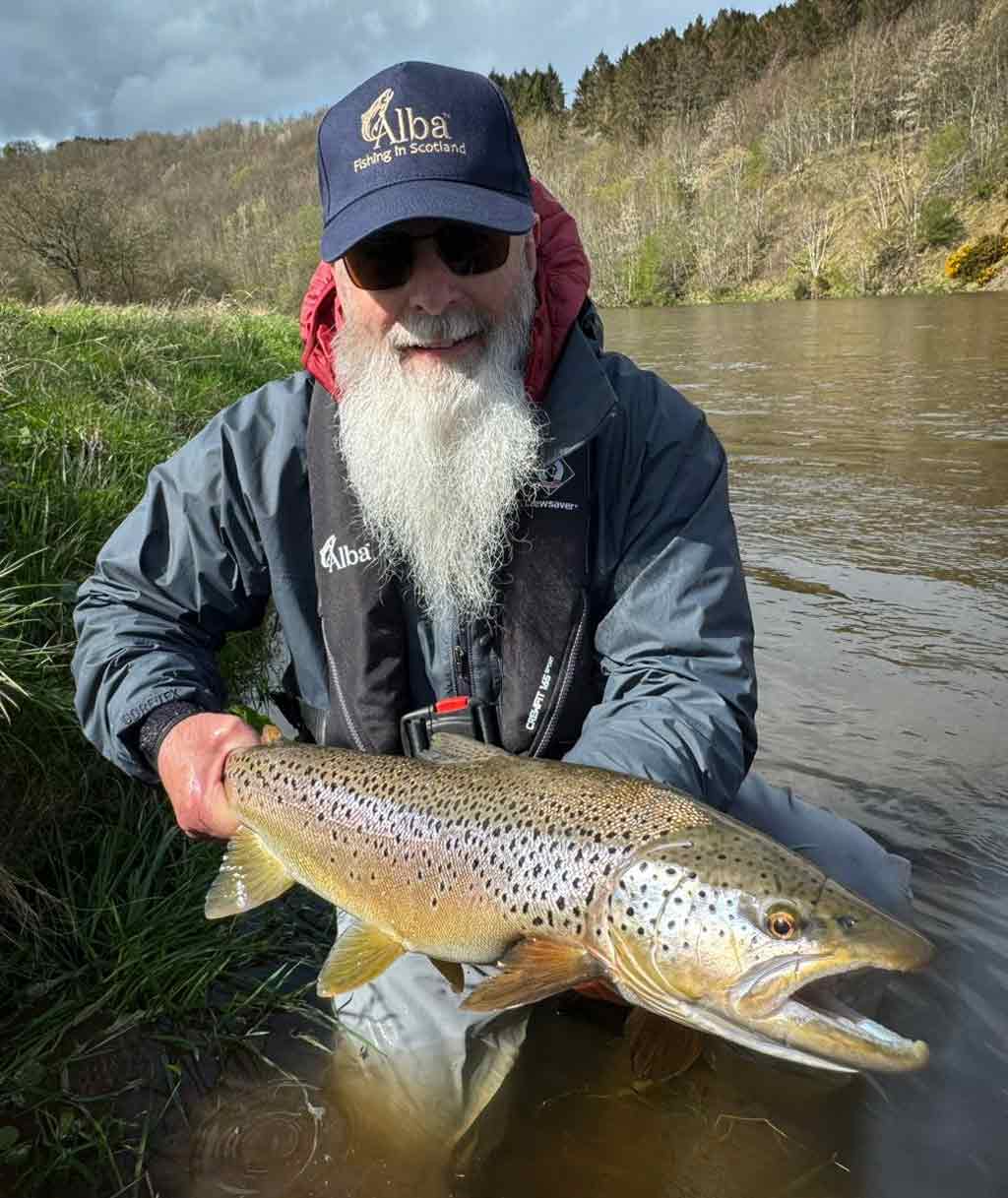
Equally big trout like the 6lb fish below have been caught on this set up.
A common mistake is to underestimate how hard these fish fight. Often, clients try to bully fish in without playing them. This causes big trout to splash, jump or twist on the surface and never usually ends well.
The other common mistake is that when the fish is running the left hand of the guest hovers close to the spinning reel handle.
You only have t touch this once and it’s enough resistance to break a fish off. So the thing to do is keep your hand clear of the reel with a running fish.
Importantly you should remain calm. These fish will surprise you how hard they fight. Take your time, listen to your guide and give the fish the respect it deserves.
Finally when you identify a rising fish, start short with your casts. In that you don’t want to show the fish fly line. Before lifting to cast again, allow the fly to drift well downstream of the fish before re-casting.
If you were short in your first cast, lengthen line slightly and work closer to the fish. Natural you will aim to present the fly with a drag free drift, so be careful about how to mend. If possible use a squiggle or reach cast to introduce slack into the line. Your guide will help with this.

Firstly your guide will know where the best dry fly pools are. You should understand that these pools are “feeding pools”. In other words, trout will move considerable distances from safe deeper holes, to move into a shallower pools.
These shallow feeding pools offer better feeding opportunities to scoop up drifting flies. Equally wind is a big consideration here. Look for areas that are sheltered as flies get a better chance to settle on the water.
Therefore trout are more willing to move for them as they are less likely to get blow. One day on the river Tweed last year, we were plagued by a cold northerly wind. On the 2 mile stretch of river we fished, there was only one pool sheltered from this wind. Guess what? All the fish were feeding here and it was a pool that was normally unproductive.
But trout know to move to these locations that present the best opportunities to mop up these flies.
Consider this, why would a trout bother to chase a fly in a windy pool, when evrytime he goes to take the fly, it gets blown away.
In summary, you have to think like a trout!

Without question, my number one tip is to degrease your tippet at the business end. If you’ve ever read the excellent “Trout and the fly” by Brian Clarke and John Goddard, look at the photos of tippet thats not been degreased, from the trouts perspective.
In fact, Ive actually watched trout in a Stillwater come up to a fly, inspect it and turn away. Ive then treated the tippet and recast to watch a trout take the fly with utter confidence. The only time you will get an away with this is if you cast downstream to a trout and the fish cannot see the tippet.
Or indeed if you have a less educated smaller fish, lacking in experience.
Secondly, it’s vital to prepare well when targeting a feeding fish. If you need to wade into a casting position, take your time.
Spending an extra 5 minutes to get int a position without creating a disturbance will reap rewards. Be a ninja or a stealth burglar!
