
UK +44 131 560 6629 USA TOLL FREE 800-972-0408

UK +44 131 560 6629 USA TOLL FREE 800-972-0408
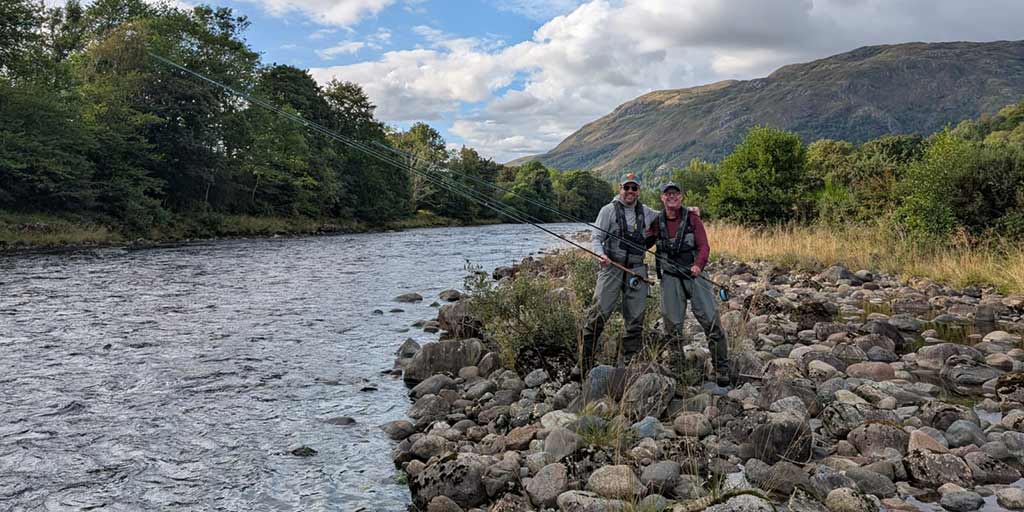
Fort William and Glencoe offer excellent opportunities for Atlantic salmon fishing in the Scottish Highlands. Several rivers lie within easy reach, including the Lochy, Nevis, Moriston and Oich.
These rivers offer varied fishing conditions, from powerful flows and deep pools to smaller, rain-fed Highland rivers.

The River Lochy is one of Scotland's best-known salmon rivers, particularly for its large spring Atlantic salmon.
The river flows for approximately 10 miles (16km) through Scotland's Great Glen, before entering Loch Linnhe near Fort William.
Spring salmon on the Lochy can be particularly impressive, with fish weighing 12–15lb and larger specimens occasionally caught.
Furthermore, the river offers the opportunity to fish beneath Ben Nevis, Britain's highest mountain.
The Lochy has a mixture of deep holding pools, flowing runs and attractive fly fishing water. Consequently, it offers an interesting challenge for experienced salmon anglers visiting Scotland.
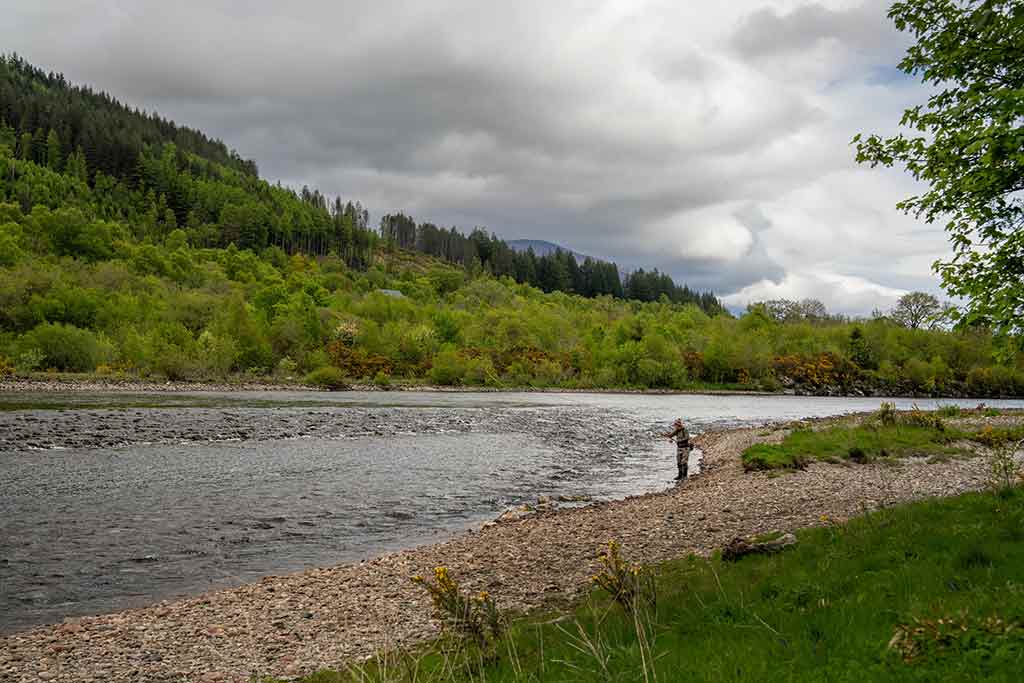
Further north of Fort William, the Rivers Moriston and Oich provide additional Atlantic salmon fishing opportunities.
Both rivers flow into Loch Ness and form part of the wider River Ness catchment.
The River Moriston flows through Glen Moriston before entering Loch Ness near Invermoriston.
It offers a mixture of fast-flowing runs, deeper pools and sections influenced by hydroelectric water management.
Consequently, river levels and controlled water releases can affect fishing conditions. This is a good summer river and offers good sport when water levels are favourable. In addition there are healthy runs of Grilse as well as the odd sea trout.
The Morsiton is accessable from Fort William and Glencoe house.

The River Oich connects Loch Oich with Loch Ness and forms another important part of the Ness catchment.
The river offers salmon fishing across a variety of pools and flowing sections. However, water levels and fish movements influence the most productive fishing periods.
As with the Moriston, access to salmon fishing depends on obtaining permission for the relevant beat.
The River Awe is a short, powerful Atlantic salmon river near Taynuilt in Argyll, on Scotland's west coast. It flows approximately four miles (6.4km) from Loch Awe into Loch Etive.
The river has a long history of producing large Atlantic salmon. Although catches vary, fish exceeding 20lb are still recorded.
Unlike many Scottish salmon rivers, the Awe benefits from regulated flows controlled by the hydroelectric barrage at Loch Awe. Consequently, the river can remain fishable during periods of low rainfall.
••Conservation: Catch and release is practised, with beat-specific rules applying.
The River Awe is accessible from several popular West Highland accommodation centres.
| Starting location | Approximate driving time |
| Glencoe House, Glencoe | 50–60 minutes |
| Fort William | 60–70 minutes |
| Oban | 20–25 minutes |
These estimates are for the Bridge of Awe and Taynuilt area. Journey times may vary depending on the fishing beat, road conditions and traffic.
For guests staying at Glencoe House or in Fort William, the River Awe is a practical option for a guided salmon fishing day. Furthermore, anglers staying in Oban can reach the river in approximately 20 minutes.

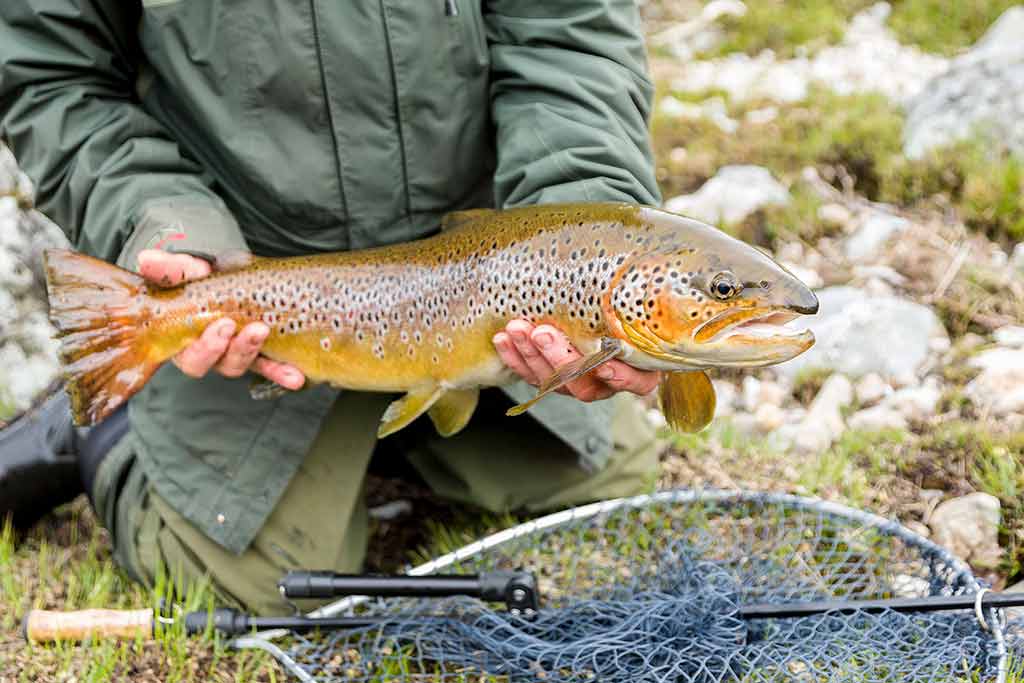
The Scottish Highlands offer excellent wild brown trout fishing, with numerous rivers and lochs within easy reach of Fort William and Glencoe.
North of Fort William, anglers can explore the River Garry, Loch Garry and several remote Highland hill lochs. These waters support populations of wild brown trout, offering a variety of fishing opportunities.
Trout fishing generally improves during April as water temperatures rise. Furthermore, May and June often provide some of the most productive fishing of the season.
For anglers seeking larger fish, Loch Arkaig and Loch Quoich also hold Ferox trout. These predatory brown trout can grow to impressive sizes. Quoich can be very productive and trolling lures up the loch is highly effective. On a recent trip there we landed 6 Ferox trout in a day. The largest was 9lb.

As well as triolling for large Ferox trout, Loch Arkaig and Loch Quoich offer excellent opportunities to experience traditional Scottish loch-style fly fishing for wild brown trout.
The successful method is to fish from a drifting boat. In fact trout can be caught close to the boat with short casting, if there is a good wind and steady drift. Typically. we fish a team of wet flies. However dry fly fishing can be highly effective during a hatch.
At Alba Game Fishing, we provide quality fishing tackle, life jackets and experienced local guides. Moreover the fly patterns we provide are highly effective and proven, tied by our guides.
Loch Shiel is another attractive trout fishing destination, approximately 25 minutes west of Fort William.
The loch stretches south from Glenfinnan and offers traditional boat fishing for wild brown trout.
Furthermore, the northern end of Loch Shiel provides views towards the Glenfinnan Monument and the famous Glenfinnan Viaduct.
Furthermore, Loch Shiel combines wild brown trout fishing with some of the most recognisable scenery in the Scottish Highlands.

The west coast of Scotland also offers varied sea fishing opportunities, both from boats and the shoreline.
The deep sea lochs around Fort William, Glencoe and Oban provide sheltered fishing areas and access to several saltwater species.
Equally your guide Adam, is a doctor in Marine Science and uses his deeper knowledge and understanding to identify the best shore marks and techniques.
Furthermore you can target a good variety of species, pollack, wrasse, mackerel, cod, dogfish and skate.
