UK +44 131 560 6629 USA TOLL FREE 800-972-0408

UK +44 131 560 6629 USA TOLL FREE 800-972-0408
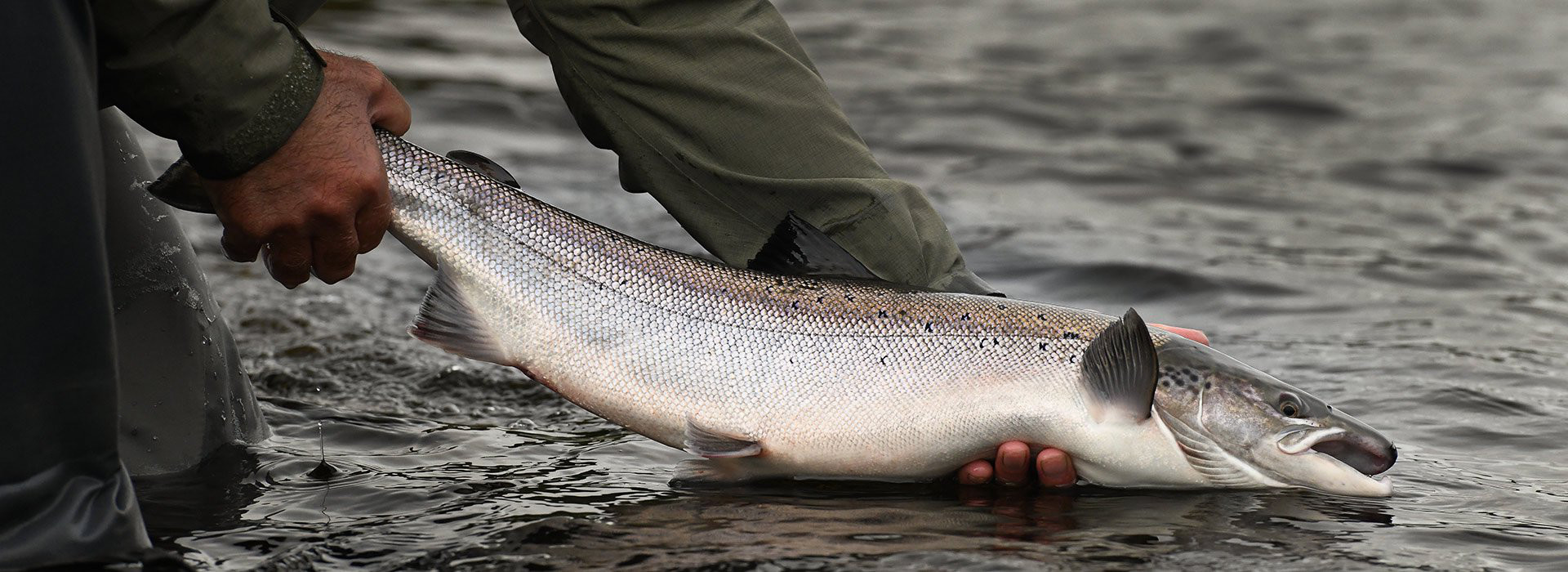
Questions often asked about learning to fish for salmon in Scotland. If you are thinking of learning how to fish for salmon, or indeed to improve your existing techniques, this may help.
To begin with, Atlantic salmon hatch in freshwater rivers before migrating to the sea to mature. Eventually, they return to their home rivers to spawn. Because of this journey, salmon appear in Scottish rivers at specific times of year. By understanding their life cycle, you can better predict when fish are present and how they behave in different water conditions.
Once in freshwater, salmon stop feeding. However, they still react to flies and lures through instinct or aggression. Typically, salmon rest in pools, move during changes in water level, and respond to light, temperature, and flow. As a result, reading fish behaviour becomes a key skill for success.
First as a Sage Endorsed provider, you’ll have access to premium Sage R8 Spey Rods and reels. Also Rio fly lines, leaders, and salmon flies. In contrast, spin fishing relies on single-handed rods, fixed-spool reels, and lures such as spinners, Flying C’s or Rapalla style lures. Importantly, your guide or ghillie will help you select the right setup for the river and conditions on the day.
You will learn essential casts such as the Single Spey, Double Spey, Snap-T, Snake Roll, and Circle C. Each technique suits a specific wind direction and river flow. Consequently, you can cast safely and efficiently without needing space behind you.
Spin fishing focuses on accurate casting, controlled retrieval, and consistent coverage of the pool. As you progress, you will learn how to vary speed, angle, and depth to encourage a take from holding fish.
Fly line choice depends on water height, temperature, and current speed. For example, anglers use floating lines in warmer, lower water and sinking or sink-tip lines in colder or higher water. Most importantly, fishing at the correct depth—just above the fish—greatly increases your chances of success.
Fly selection depends on water clarity, light levels, season, and temperature. Larger or darker flies often work well in high or coloured water, while smaller or lighter patterns suit clear conditions. Throughout the day, your guide will help you adjust fly choice as conditions change.
Wind direction directly affects cast choice and safety. Certain casts keep the fly and line safely away from your body, while others help you use the wind to gain distance. Therefore, understanding wind allows you to fish confidently in all conditions.
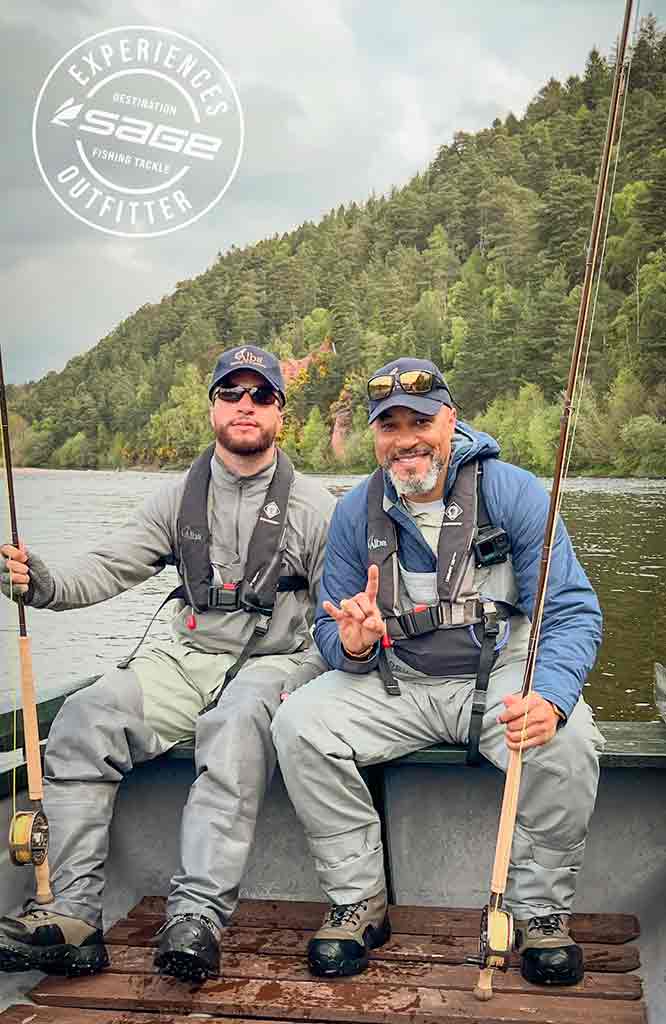
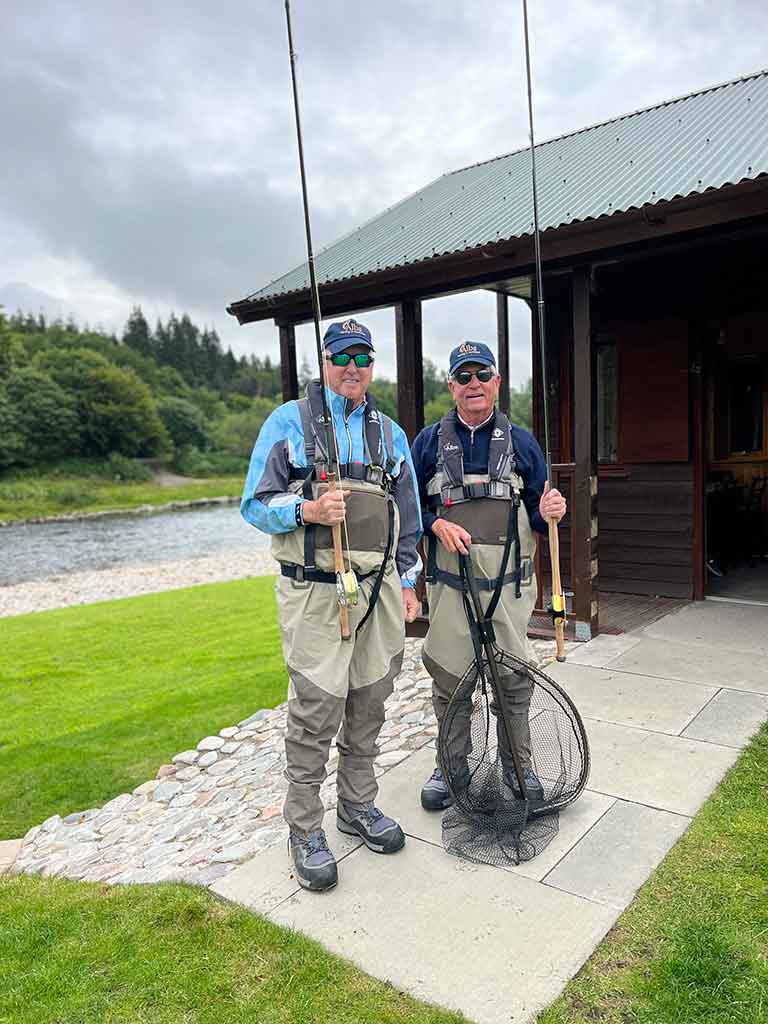
River safety always comes first. You will learn how to assess depth and current, move safely through the water, and recognise when not to wade. In addition, your guide will show you how to use a wading staff and safety equipment when required. Alba will provide you with Orvis Breathable waders and tungsten studded boots, which offer a secure grip on the river bed.
Scottish weather can change quickly, so preparation matters. You should wear breathable warm layers, waders, tungsten studded wading boots(avoid rubber soles). Equally a hat and sunglasses are mandatory for safety and comfort.
Fishing a pool requires a structured approach. You will learn how to cast at the correct angle, control swing speed, adjust depth, and step down methodically between casts. As a result, you cover the water thoroughly and fairly.
Scottish salmon fishing follows long-standing traditions. You will learn how to rotate pools, respect other anglers, and work closely with the ghillie. Good etiquette ensures everyone enjoys a smooth and respectful day on the river.
Yes—but salmon fishing rewards patience, skill, and persistence. While no one can guarantee a fish, you will fish prime water with expert guidance and proven techniques. Ultimately, whether or not you land a salmon, you will gain an authentic and memorable Scottish fishing experience.
Typically a day on the river starts at 09:00am and finishes at 17:00. However we are flexible with timings. Normally everyone fishing breaks for lunch and gathers in the fishing hut at 13:00 and resumes fishing at 14:00. Sometimes it’s best to fish through lunch, especially in the spring as the hours of 12- 3pm can be the warmest and most productive.
Yes you can choose to fish any timings that work for you. However all the costs associated with a salmon fishing day are sold “by the day” . For example, permits are only sold by the day. Equally fishing guides are contracted on a day rate basis. So changing timing is possible, but doesn’t alter the price.